
Sub-Total €0.00
Patient identification is the foundation for offering the right treatment to patients in any hospital. Patients need to be identified accurately because even a simple mistake can prove to be fatal. Patient identification wristbands are a go-to choice for many hospital administrators today, as these bands play a crucial role in preventing errors.
Wristbands for hospitals enable accurate identification by bearing the patient's name and medical history. Colour-coding and bar coding ensure improved accuracy in real-time in modern-day healthcare ecosystems. Barcodes, QR codes, and RFID technology are the latest additions to hospital wristbands to drive security across patient workflows, reducing chances of medical errors.
What Are Wristbands for Hospitals?
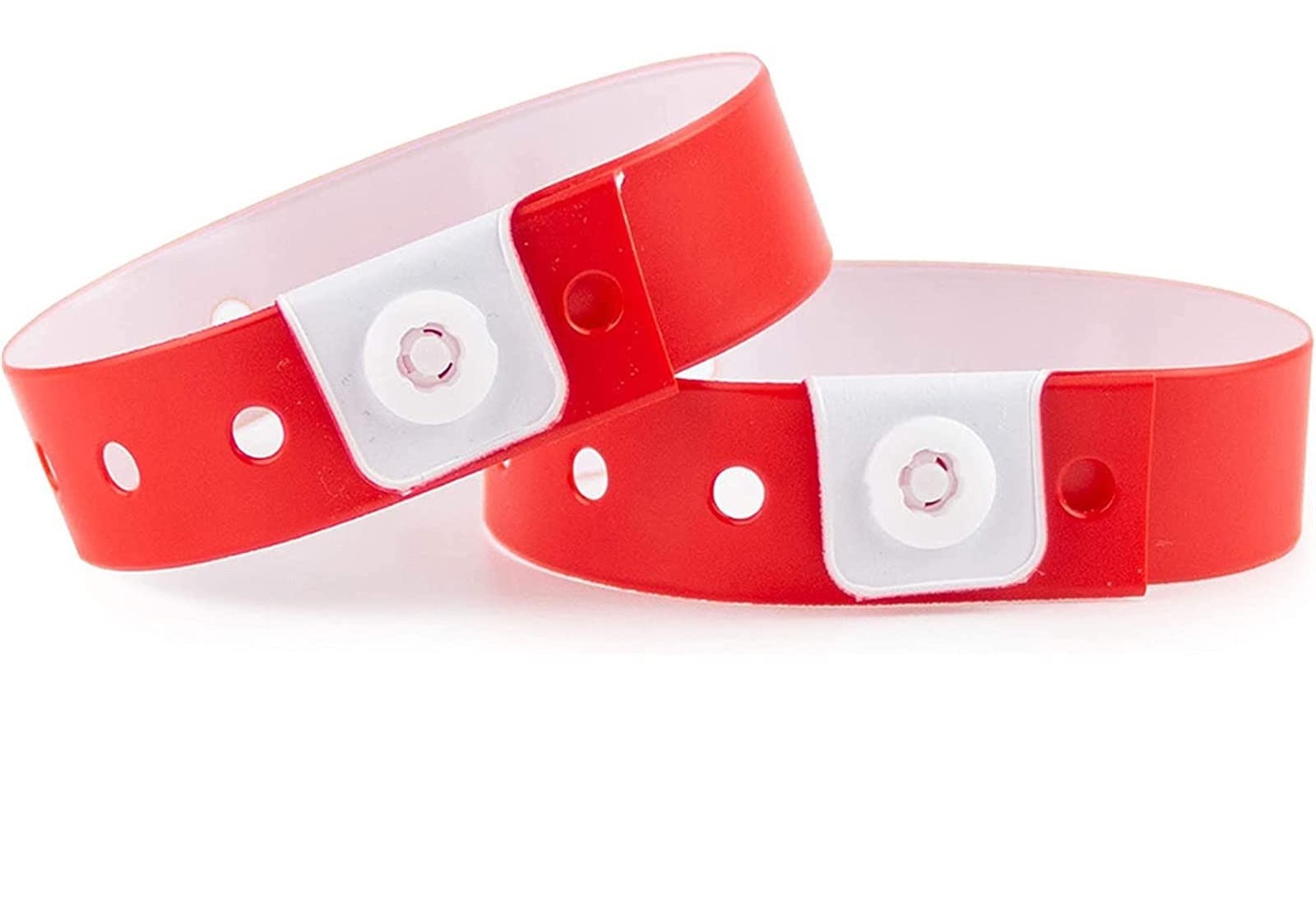
These bands are worn on the hand by patients and are also known as hospital identification wristbands. The purpose is primarily to record all medical information related to the patient throughout their stay at the hospital. Normally they are made of vinyl material which is long lasting and can be worn for days or even weeks. It is also waterproof and can only be removed by cutting it off.
A chip or a barcode on the wristband helps sync patient data across different departments like pathological labs, doctors’ prescriptions, imaging tests, etc. Wristbands Europe’s advanced hospital wristbands are waterproof, tear-and-wear-resistant, and colour-coded to enable faster response. Our medical wristbands are mostly used in medical care settings like clinics, hospitals, maternity wards, emergency departments, and outpatient centres.
Why Do Hospitals Use Patient ID Wristbands?
Most patient care settings use wristbands for hospitals because -
-
Preventing patient identification errors: These wristbands become a part of the patient’s journey from their admission to discharge. The band contains the demographic information of the patient and is applied to their wrists. Henceforth, every clinical interaction with the patient is based on details mentioned on the band, which is scanned at multiple points.
-
Medication safety: Every time medicines are administered, caregivers and nurses ensure the right dose of the right drug is given to the right patient at the right time using the right route. All this is done by cross-checking details on the patient wristband.
-
Surgical verification: Before any surgical procedure is carried out, the details on the emergency room wristbands are checked first as an essential part of the surgical safety checklist.
-
Blood transfusion safety: Every time the patient’s blood is drawn in a lab, the patient details are cross-checked from the band so that the samples and specimens are labelled correctly.
-
Patient tracking: The data present on hospital ID bands offers a seamless path at every care point for caregivers. By scanning the band or visibly noting the details on the wristband, caregivers can track every record related to a patient consistently.
-
Faster admissions: Hospital admission wristbands ensure that administrative processes involving admission and discharge of the patient. This is because the band contains all essential information about the patient that can be scanned for faster patient care.
Wristbands for Hospitals: What information is printed on hospital wristbands?
Hospital bracelets contain the following details -
-
Patient name is the legal name of the patient, including name and surname.
-
Date of birth
-
Hospital ID
-
Medical record number, which is a unique number
-
Barcode or QR Code, which is linked to the EMR (electronic medical record)
-
Allergy alerts or certain conditions that need to be flagged, wherever applicable. This is often done via colour coding
-
Name of the attending physician and the core team identifier
Types of Hospital Wristbands
Healthcare wristbands can be made from different materials. Here’s a brief explanation about each type that Wristbands Europe specialises in -
Tyvek hospital wristbands
This is the most commonly ordered material. Tyvek is a DuPont-created high-density polyethylene material containing layered fibers. Tyvek wristbands are durable, water-resistant, lightweight, tamper-evident, and tear-resistant. These are best as single–use, one-day custom hospital wristbands.
Vinyl hospital wristbands
Comparing Tyvek vs vinyl hospital wristbands, the latter are more durable than the former. Made from polyvinyl chloride, vinyl is waterproof, durable, and comfortable for multi-day use.
Soft hospital wristbands
These are plastic bracelets, making them waterproof, lightweight, and durable. These bands are ideal for long-term use.
RFID hospital wristbands
At Wristbands Europe, Radio Frequency Identification wristbands are embedded with RFID chips. These digital chips can link with the electronic records of the hospital, enabling the medical staff to access the patient's record using an RFID scanner. This advanced technology helps minimise human error.
Barcode hospital wristbands
These wristbands are similar to RFID bands, where the patient data can be scanned with ease. Barcode patient wristbands are quite simple and can be implemented without much difficulty. The bands are printable and customisable too.
QR code wristbands for hospitals
These bands contain a QR code that can be easily scanned using a tablet or a mobile device. This helps access patients’ records really easily by the caregiving team. These codes can also be connected to the hospital’s patient management system for holistic treatment.
Choosing the Right Material for Wristbands for Hospitals
A quick comparison of all the material types
|
Feature |
Tyvek |
Vinyl |
Soft Plastic |
|
Comfort |
Lightweight. Comfortable |
Soft. Comfortable |
Smooth & flexible. Comfortable |
|
Durability |
Best for 1-day use |
Durable and tear-resistant |
Durable and meant for long-term use |
|
Waterproof performance |
Water-resistant. Only for short-term use |
Fully waterproof |
Fully waterproof |
|
Cost |
Low cost option |
Moderate cost |
High cost option |
|
Printing quality |
Text, logos, and numbers can be printed with ease |
Barcodes, serial numbers, and custom printing |
Barcodes, QR codes, colour codes, and custom prints |
Features to Look For When Ordering Medical ID Wristbands For Hospitals
If you are ordering hospital wristbands, it is crucial to look for the following features -
-
Waterproof
Waterproof hospital wristbands are a pre-requisite so that the bands are not destroyed when patients wash their hands, bathe, or go through routine medical procedures. Patient information stays legible on waterproof wristbands
-
Tear-resistant
The material surely has to be durable as the bands are worn by patients on a continued basis for days. Materials that are delicate and prone to tearing will increase the use of wristbands. This, in turn, means higher costs and repeated printing of patient details by the admission department.
-
Tamper-evident wristbands
As the inpatient wristbands need to be worn on a long-term basis, the material must be tamper-resistant or tamper-evident. If someone tries to remove or transfer the bracelets, the administration department can know immediately.
-
Latex-free
Latex materials can cause allergies or aggravate the risks for patients and caregivers. Latex-free medical identification bands are a must as most people are sensitive to latex.
-
Skin-friendly
The materials of patient safety wristbands must be soft and should not irritate the skin, as patients need to wear these bands on a prolonged basis. This is especially true for newborns, elders, and those with sensitive skin.
-
Easy scanning
Wristbands for healthcare facilities should be easily scannable, whether it contains RFID chips or QR codes. Remember, accurate scanning reduces risks of errors.
-
High-quality print
Colour-coded hospital wristbands as well as other types of bands need to be printed with patient details. The material should be strong enough for embedding RFID chips, barcodes, QR codes, and other identifiers while supporting high-quality printing because no information can fade or smudge.
-
Secure adhesive closure
Ensure that allergy wristbands in hospitals are equipped with adhesive closures so that the bands are fastened securely on the patient’s arms. The objective is to prevent unauthorised removal or transfer of the wristbands.
.jpg)
Benefits of Hospital Wristbands for Hospitals
-
Improved patient safety: Printable hospital wristbands remove manual errors that, in healthcare settings, can have serious consequences. With printed or coded bands, it is easy to identify patients and that too quite fast, ensuring minimal risks.
-
Faster workflows: Hospital wristbands help improve operational efficiency as the wristband is integrated with the hospital patient system. Thus, at different touchpoints, it becomes seamless for healthcare providers to keep track of the patient's progress.
-
Better compliance - Hospital wristbands are created as per safety protocols so that the patient care process is compliant with the accepted standards.
-
Lower operational costs - Healthcare wristbands should be made from reliable materials so that workflows are efficient and the replacement frequency is minimised. This helps reduce operational costs.
Frequently Asked Questions
-
How do barcode wristbands improve patient safety?
Barcode hospital wristbands enable faster identification of patients and seamless treatment at different touchpoints, for example medication administration, lab tests, consultations, surgeries, etc.
-
Are hospital wristbands recyclable?
If hospitals use materials that can be recycled, then they can recycle the bands through specialised programmes.
-
How long should a hospital wristband stay on?
The wristbands should typically remain from the admission to the discharge of the patient. It should be administered and removed by staff members.
-
What are colour-coded hospital wristbands?
Colour-coded bands help communicate patient details as well as distinguish patients based on certain medical conditions, like allergy.
-
How do hospitals identify patients?
Patient identification wristbands are the latest tools that are used by hospitals for storing and tracking patient records. This can be used with RFID tags, QR codes, barcodes, etc.
Conclusion
Hospital wristbands are cost-effective resources that help drive better patient safety by minimising identification errors and making workflows efficient. Focus on choosing wristbands that are durable, comfortable, and printed accurately. Speak with our specialised team at Wristbands Europe to create compliant medical wristbands to promote patient safety.